
Recipe · Seafood
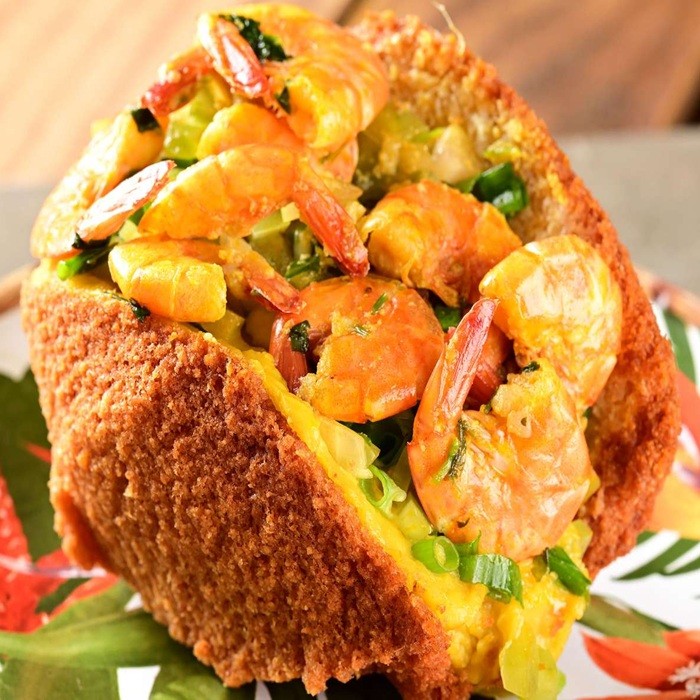
Acaraje black-eyed pea fritters with shrimp filling
About this recipe
This recipe comes from a regional cooking tradition that draws on its own pantry, technique, and culinary history. The full editorial context for this cuisine is something we're still developing; the scaling and conversion tools above work the same regardless of origin.
As a seafood dish, Acaraje black-eyed pea fritters with shrimp filling demands timing precision: the difference between perfect and overcooked is often less than 90 seconds, and the result of overshooting is a textural penalty there's no fixing.
The scaler above resizes every ingredient to the number of servings you actually want; Cook Mode walks you through the recipe one step at a time with hands-free timers.
Recipe data is sourced from TheMealDB's open community database; ScaleRecipe handles the curation, the scaling math, the editorial commentary, and the conversion utilities woven into each page.
Translate this recipe
Reading in English
Listen to this recipe
No matching voice on this device
Method
- step 1
- Make the filling by placing the onion, ginger, garlic, chilli, and some salt into food processor. Purée until smooth. Heat the oil in a frying pan and pour the purée into it. Fry for 5 mins or until cooked through. Add the prawns, tomatoes and chopped coriander. Squeeze in the lime and add salt to taste. Cook for 3 mins, or until the prawns have cooked through. Remove from the heat.
- step 2
- Drain and rinse the black-eyed peas. Pour into a food processor with the garlic and chili. Purée until smooth. Scrape into a bowl and add the onion, flour, salt, chilli powder and baking powder. Mix and roll into 16 balls.
- step 3
- Heat the oven to 190C/170C fan/gas 5. Heat 8cm of the palm or vegetable oil in a wok or small heavy pan. When a small piece of bread sizzles, drop 4-5 balls into the oil. Fry until golden and crisp, about 4-5 mins. Drain on kitchen paper and repeat until they are all finished. You can keep them warm in the oven while you finish. Slice the fritters open down the centre and spoon the prawn filling in. Serve with hot sauce.
Cooking notes
Scaling works best when you weigh ingredients rather than measure by volume — small differences in packing can compound at higher multipliers.
For volume-to-weight conversions of any ingredient — flour, sugar, butter, salts — use the ingredient converter. To translate the recipe's oven temperature between °C, °F and gas mark, see the temperature converter.
When you scale this recipe up or down, remember that cooking time does not scale linearly. A doubled cake takes longer, but not twice as long; a doubled soup takes roughly twice as long. The cooking-time guide gives sensible starting estimates by dish geometry.
Scaling notes
Scaling Acaraje black-eyed pea fritters with shrimp filling
Acaraje black-eyed pea fritters with shrimp filling is written for around four servings as it stands on this page — scaling it up for a party or down for a meal-for-one is the small math problem most home cooks face every week. Here's how this particular dish responds to scaling, what changes linearly, and what doesn't.
Seafood is the most scaling-sensitive protein because the overcooking window is narrow and the penalty is steep. Scale Acaraje black-eyed pea fritters with shrimp filling per piece if you can — cook three fillets in two batches rather than crowd the pan into one. Sauce-based seafood dishes scale linearly, but always taste before adding more salt: brininess from the seafood itself doesn't scale predictably.
When you scale the flour in this recipe, weigh it in grams if you can — a cup of flour can weigh anywhere from 113 g to 150 g depending on how you measure. The ScaleRecipe ingredient converter uses the King Arthur Baking reference of 120 g/cup for all-purpose flour, which is the same standard most modern baking books assume.
Skip the math entirely — ScaleRecipe's scaler rewrites every ingredient line above with proper culinary fractions and smart unit promotion the moment you change the serving count. Open the scaler →
Beyond the recipe
Substitutions & make-ahead — Acaraje black-eyed pea fritters with shrimp filling
Two things home cooks ask about most when they're outside the recipe's exact assumptions: what swaps work for which ingredients, and how the dish behaves when you make it ahead. Both depend on what Acaraje black-eyed pea fritters with shrimp filling is doing structurally — here's the practical version.
Substitution ideas
All-purpose flour
For gluten-free, a 1-to-1 gluten-free baking blend (one that contains xanthan gum) is the most reliable swap. For texture variations: bread flour gives chewier results; cake flour gives more tender. Avoid almond or oat flour as a 1:1 swap — they don't form gluten and most recipes structurally depend on it.
For weight-based swaps and arbitrary quantities, the ingredient density converter and the cup-to-grams chart cover most pantry staples.
Make-ahead and storage
Seafood is the worst-tempered category for make-ahead — texture and flavour both degrade quickly after cooking. Acaraje black-eyed pea fritters with shrimp filling should ideally be cooked the day it's served. If a make-ahead is unavoidable, prep components (the sauce, marinade, vegetables, garnishes) the day before and cook the fish or shellfish at the last moment. Cooked seafood develops a pronounced fishy off-flavour within 24 hours even when properly refrigerated.
Cooking aids
Tools to use while you cook this.
Each opens in a new tab so the timer keeps running. The math is auditable on the guide page below each converter, with worked examples and where the numbers come from.
Volume
Tablespoons, teaspoons, cups, ml, fluid ounces — every culinary volume unit, with US/metric/imperial cups handled distinctly.
OpenWeight
Grams, ounces, pounds, kilograms — exact for any ingredient, plus the volume-to-weight conversions for ~40 pantry staples.
OpenTemperature
Fahrenheit, Celsius, gas mark — translate any oven temperature, with notes on conventional vs convection.
OpenCooking time
The cube-root rule for scaling up, the differences between meat / cake / soup geometry, and sensible starting estimates.
OpenPan size
9-inch round vs 8-inch square vs 13×9. The math is surface area, not diameter — and the converter shows you both.
OpenLength
Inches and centimetres — for when a recipe says “cut into 1-inch pieces” and your ruler is metric.
OpenIngredient density
A cup of flour weighs 120 g; a cup of honey weighs 340. The full table of ~40 staples, with sources.
OpenOpen in main scaler
Edit the recipe text, scale by serving count, and copy the result. Same parser as the in-page scaler, more room to work.
OpenFrom the journal
Original essays on the small details.
The why behind the technique — original writing on the ingredient and equipment choices that separate a good cook from a frustrated one.
Reading a recipe like a chef
The 30-or-so recipe terms that show up most often, decoded
Read essayMay 4, 2026
Cooking for one — scaling principles
The math, the practical realities, and the recipes designed for one from the start
Read essayMay 4, 2026
How long do leftovers actually last?
Beyond the USDA's 3–4 days: the variables that actually determine the safe window
Read essayMay 4, 2026
Go deeper
Where this recipe sits in the wider tradition.
Each guide below is a real essay on the cuisine or the category — pillars, staples, techniques worth learning — paired with a curated grid of recipes filed under it.
Keep exploring
Ready to cook?
Scale it to your table, then get into the kitchen.
Send this recipe to the main scaler for further editing, or jump straight into Cook Mode for a hands-free walk-through with timers running.