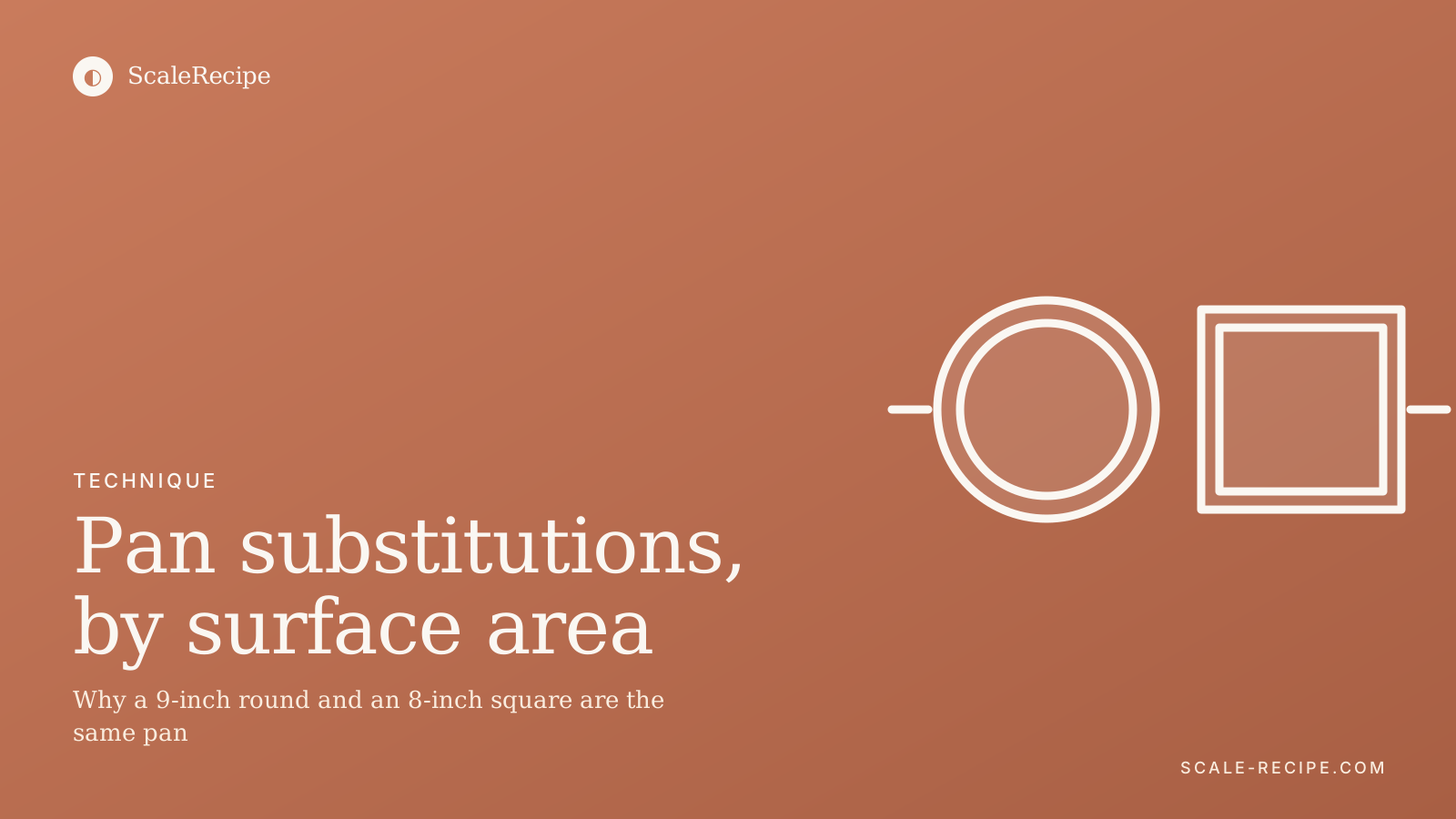
The recipe says 9-inch round. You have an 8-inch square. They're both about the same size, right? Actually — yes, surprisingly. They're within 1 % of each other. But a 9-inch round and a 9-inch square, the substitution most cooks instinctively reach for, are 25 % apart. Pan substitution is one of those areas where the obvious answer is the wrong one.
The right comparison is surface area, not linear dimension. A circle of diameter 9 inches has area ≈ 64 in². A square of side 8 inches has area = 64 in². Same capacity, same batter depth, same bake. A square of side 9 inches has area = 81 in² — it holds 27 % more, which means the same batter spread thinner, which means a faster bake at a lower edge-to-centre ratio.
The math, briefly
- Round pan area = π × (diameter / 2)²
- Square pan area = side × side
- Rectangular pan area = length × width
From those three formulas, the common kitchen pans work out to:
- 8″ round = 50 in²
- 9″ round = 64 in² · ≈ 8″ square (64 in²)
- 10″ round = 79 in² · ≈ 9″ square (81 in²)
- 8 × 8″ square = 64 in²
- 9 × 13″ rectangle = 117 in² · ≈ two 9″ rounds (128 in²)
- 9 × 5″ loaf = 45 in² · 8 cup capacity
- 8.5 × 4.5″ loaf = 38 in² · 6 cup capacity
Adjustments when the swap isn't clean
When the substitution is within ~10 % of the original area, no adjustment is needed — bake at the recipe's temperature for the recipe's time and trust the doneness check.
When the swap pan is significantly larger (≥ 15 %), the batter spreads thinner. Two adjustments:
- Reduce oven temperature by 25 °F (about 15 °C).
- Start checking 5–10 minutes earlier than the recipe says.
When the swap pan is significantly smaller (≥ 15 %), the batter sits deeper.
- Bake at the original temperature.
- Expect 5–15 minutes longer total bake.
- If the top is browning before the centre sets, cover loosely with foil.
Why “same diameter” isn't the same pan
A 9-inch round (64 in²) and a 9-inch square (81 in²) differ by 27 %. The square holds considerably more batter at the same depth, or — more relevantly — the same batter spreads thinner. Bake a 9-inch round cake recipe in a 9-inch square and you get a thin, dry rectangle. Bake a 9-inch square recipe in a 9-inch round and your batter overflows.
Loaf pans: the asymmetric trap
Loaf pan sizes vary more than any other category. The two most common are 8.5 × 4.5″ (38 in², 6 cup) and 9 × 5″ (45 in², 8 cup) — a 33 % capacity difference. The taller, narrower 8.5 × 4.5 produces a more dramatic loaf with better dome; the 9 × 5 produces a flatter, faster-baking loaf. Most banana bread, pound cake, and quick bread recipes assume 9 × 5 — the more common American size — but plenty of older cookbooks default to 8.5 × 4.5 without saying so. If your loaf came out flat, the pan size may be the reason.
The interactive version
The pan-size convertertakes the math off your plate — pick your “from” pan and your “to” pan, see the suggested dimension and the capacity ratio. Pair it with the cooking-time guidefor the time adjustment when you're also scaling the recipe up or down.