
Italian · Miscellaneous
Osso Buco alla Milanese
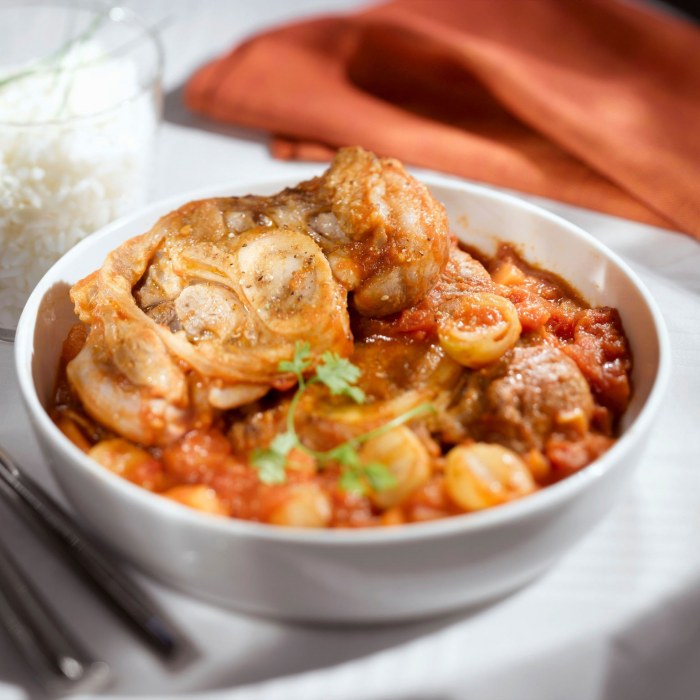
About this recipe
Italian cooking is built on time-honoured regional traditions — pasta from the south, risotto from the north, the everyday economy of a Tuscan kitchen — where simplicity, seasonality, and respect for the produce typically matter more than complexity of technique.
Osso Buco alla Milanese sits between categories in a way that's common with regional specialities — the dish has its own technique that doesn't fit cleanly into "main course" or "side", which is part of what makes it distinctive.
Set your servings in the scaler above and every line of the recipe rewrites itself with smart fractions and unit promotion. Open Cook Mode to step through it hands-free with timers running.
Recipe data is sourced from TheMealDB's open community database; ScaleRecipe handles the curation, the scaling math, the editorial commentary, and the conversion utilities woven into each page.
Translate this recipe
Reading in English
Listen to this recipe
No matching voice on this device
Method
- Heat the oven to 300 degrees.
- Dredging the shanks: pour the flour into a shallow dish (a pie plate works nicely). Season the veal shanks on all sides with salt and pepper. One at a time, roll the shanks around in the flour coat, and shake and pat the shank to remove any excuses flour. Discard the remaining flour.
- Browning the shanks: put the oil and 1 tablespoon of the butter in a wide Dutch oven or heavy braising pot (6 to 7 quart) and heat over medium-high heat. When the butter has melted and the oil is shimmering, lower the shanks into the pot, flat side down; if the shanks won’t fit without touching one another, do this in batches. Brown the shanks, turning once with tongs, until both flat sides are well caramelized, about 5 minutes per side. If the butter-oil mixture starts to burn, lower the heat just a bit. Transfer the shanks to a large platter or tray and set aside.
- The aromatics: pour off and discard the fat from the pot. Wipe out any burnt bits with a damp paper towel, being careful not to remove any delicious little caramelized bits. Ad the remaining 2 tablespoons butter to the pot and melt it over medium heat. When the butter has stopped foaming, add the onion, carrot, celery, and fennel. Season with salt and pepper, stir, and cook the vegetables until they begin to soften but do not brown, about 6 minutes. Stir in the garlic, orange zest, marjoram, and bay leaf, and stew for another minute or two.
- The braising liquid: add the wine, increase the heat to high, and bring to a boil. Boil, stirring occasionally, to reduce the wine by about half, 5 minutes. Add the stock and tomatoes, with their juice, and boil again to reduce the liquid to about 1 cup total, about 10 minutes.
- The braise: Place the shanks in the pot so that they are sitting with the exposed bone facing up, and pour over any juices that accumulated as they sat. Cover with parchment paper, pressing down so the parchment nearly touches the veal and the edges hang over the sides of the pot by about an inch. Cover tightly with the lid, and slide into the lower part of the oven to braise at a gentle simmer. Check the pot after the first 15 minutes, and if the liquid is simmering too aggressively, lower the oven heat by 10 or 15 degrees. Continue braising, turning the shanks and spooning some pan juices over the top after the first 40 minutes, until the meat is completely tender and pulling away from the bone, about 2 hours.
- The gremolata: While the shanks are braising, stir together the garlic, parsley, and lemon zest in a small bowl. Cover with plastic wrap and set aside in a cool place (or the refrigerator, if your kitchen is very warm.)
- The finish: When the veal is fork-tender and falling away from the bone, remove the lid and sprinkle over half of the gremolata. Return the veal to the oven, uncovered, for another 15 minutes to caramelize it some.
- Using a slotted spatula or spoon, carefully lift the shanks from the braising liquid, doing your best to keep them intact. The shanks will be very tender and threatening to fall into pieces, and the marrow will be wobbly inside the bones, so this can be a bit tricky. But if they do break apart, don’t worry, the flavor won’t suffer at all. Arrange the shanks on a serving platter or other large plate, without stacking, and cover with foil to keep warm.
- Finishing the sauce: Set the braising pot on top of the stove and evaluate the sauce: if there is a visible layer of fat floating on the surface, use a large spoon to skim it off and discard it. Taste the sauce for concentration of flavor. If it tastes a bit weak or flat, bring it to a boil over high heat, and boil to reduce the volume and intensify the flavor for 5 to 10 minutes. Taste again for salt and pepper. If the sauce wants more zip, stir in a teaspoon or two of the remaining gremolata.
- Portioning the veal shanks: if the shanks are reasonably sized, serve one per person. If the shanks are gargantuan or you’re dealing with modest appetites, pull apart the larger shanks, separating them at their natural seams, and serve smaller amounts. Be sure to give the marrow bones to whomever prizes them most.
- Serving: Arrange the veal shanks on warm dinner plates accompanied by the risotto, if serving. Just before carrying the plates to the table, sprinkle on the remaining gremolata and then spoon over a generous amount of sauce – the contact with the hot liquid will aromatize the gremolata and perk up everyone’s appetite with the whiff of garlic and lemon.
Cooking notes
Scaling works best when you weigh ingredients rather than measure by volume — small differences in packing can compound at higher multipliers.
For volume-to-weight conversions of any ingredient — flour, sugar, butter, salts — use the ingredient converter. To translate the recipe's oven temperature between °C, °F and gas mark, see the temperature converter.
When you scale this recipe up or down, remember that cooking time does not scale linearly. A doubled cake takes longer, but not twice as long; a doubled soup takes roughly twice as long. The cooking-time guide gives sensible starting estimates by dish geometry.
Scaling notes
Scaling Osso Buco alla Milanese
Osso Buco alla Milanese is written for around four servings as it stands on this page — scaling it up for a party or down for a meal-for-one is the small math problem most home cooks face every week. Here's how this particular dish responds to scaling, what changes linearly, and what doesn't.
Recipes in this category vary in how cleanly they scale. The default rule of thumb still applies to Osso Buco alla Milanese: multiply ingredients linearly, adjust seasoning by 1.5× when doubling (not 2×), and remember that bake or roast time scales by the cube root of the volume change while sauté and simmer time stays roughly constant.
When you scale the flour in this recipe, weigh it in grams if you can — a cup of flour can weigh anywhere from 113 g to 150 g depending on how you measure. The ScaleRecipe ingredient converter uses the King Arthur Baking reference of 120 g/cup for all-purpose flour, which is the same standard most modern baking books assume.
Butter is one of the easier ingredients to scale because it's sold in standardised sticks: 1 US stick = 8 tablespoons = ½ cup = 113 g. Any fractional scaling lines up neatly on a kitchen scale, and grocery-store butter packaging is already pre-marked in tablespoon increments along the wrapper.
Skip the math entirely — ScaleRecipe's scaler rewrites every ingredient line above with proper culinary fractions and smart unit promotion the moment you change the serving count. Open the scaler →
Beyond the recipe
Substitutions & make-ahead — Osso Buco alla Milanese
Two things home cooks ask about most when they're outside the recipe's exact assumptions: what swaps work for which ingredients, and how the dish behaves when you make it ahead. Both depend on what Osso Buco alla Milanese is doing structurally — here's the practical version.
Substitution ideas
Butter
For sautéing or browning, equal-weight olive oil or a neutral oil works directly. For baking, equal-weight coconut oil (melted, then chilled to the same softness the recipe expects) gives a buttery richness; a quality vegan butter brick is the structural match for cookies and pastries where firmness matters.
Cooking wine
Broth + 1 tbsp white wine vinegar or lemon juice per cup reproduces the acidic backbone. White grape juice for white-wine recipes; pomegranate or red grape juice for red. Non-alcoholic wines work directly but flavour varies wildly between brands — taste before committing.
For weight-based swaps and arbitrary quantities, the ingredient density converter and the cup-to-grams chart cover most pantry staples.
Make-ahead and storage
Storage and reheating for Osso Buco alla Milanese depend heavily on its cooking method. As a default: sauced and braised dishes refrigerate well for 3 days; fried and crispy items lose their texture during storage and are best served fresh; baked goods follow dessert rules (airtight container, room temperature unless they contain cream or custard).
Recipe video
Osso Buco alla Milanese
Keep cooking
More miscellaneous recipes
Cooking aids
Tools to use while you cook this.
Each opens in a new tab so the timer keeps running. The math is auditable on the guide page below each converter, with worked examples and where the numbers come from.
Volume
Tablespoons, teaspoons, cups, ml, fluid ounces — every culinary volume unit, with US/metric/imperial cups handled distinctly.
OpenWeight
Grams, ounces, pounds, kilograms — exact for any ingredient, plus the volume-to-weight conversions for ~40 pantry staples.
OpenTemperature
Fahrenheit, Celsius, gas mark — translate any oven temperature, with notes on conventional vs convection.
OpenCooking time
The cube-root rule for scaling up, the differences between meat / cake / soup geometry, and sensible starting estimates.
OpenPan size
9-inch round vs 8-inch square vs 13×9. The math is surface area, not diameter — and the converter shows you both.
OpenLength
Inches and centimetres — for when a recipe says “cut into 1-inch pieces” and your ruler is metric.
OpenIngredient density
A cup of flour weighs 120 g; a cup of honey weighs 340. The full table of ~40 staples, with sources.
OpenOpen in main scaler
Edit the recipe text, scale by serving count, and copy the result. Same parser as the in-page scaler, more room to work.
OpenFrom the journal
Original essays on the small details.
The why behind the technique — original writing on the ingredient and equipment choices that separate a good cook from a frustrated one.
Reading a recipe like a chef
The 30-or-so recipe terms that show up most often, decoded
Read essayMay 4, 2026
Cooking for one — scaling principles
The math, the practical realities, and the recipes designed for one from the start
Read essayMay 4, 2026
How long do leftovers actually last?
Beyond the USDA's 3–4 days: the variables that actually determine the safe window
Read essayMay 4, 2026
Go deeper
Where this recipe sits in the wider tradition.
Each guide below is a real essay on the cuisine or the category — pillars, staples, techniques worth learning — paired with a curated grid of recipes filed under it.
Cuisine guide · Italian
Cooking the Italian way
Cuisine of restraint, regionality, and very good ingredients.
Open the guideCategory guide · Miscellaneous
How to cook in this category
The dishes that don't fit a single protein bucket — and are often the best at the table.
Open the guideKeep exploring
Ready to cook?
Scale it to your table, then get into the kitchen.
Send this recipe to the main scaler for further editing, or jump straight into Cook Mode for a hands-free walk-through with timers running.