
Category guide
Pasta
recipes.
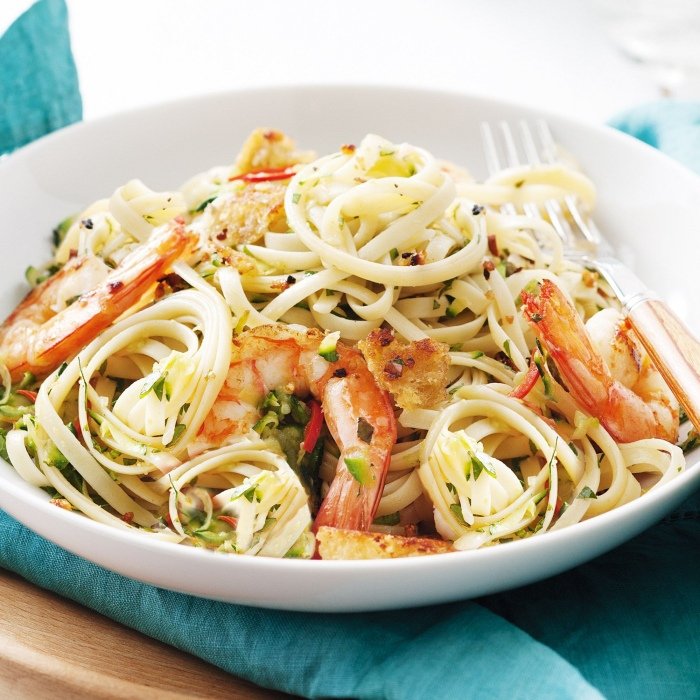
Pasta cooking is an exercise in restraint — the best dishes have four or five ingredients, balanced precisely, and the technique is what makes them. Aglio e olio is garlic, oil, chilli, parsley, and pasta water. Cacio e pepe is pecorino, black pepper, and pasta water. Pomodoro is tomato, garlic, basil, and olive oil. Each of these stands or falls on the texture of the noodle (al dente — toothy, never mushy), the salinity of the cooking water (a generous tablespoon per litre), and the marriage of pasta with sauce in the pan with a splash of starchy cooking water that emulsifies everything together. Italians don't pour sauce over pasta; they finish pasta in the sauce.
Editorial guide reviewed
Pasta recipes
12 dishes to cook from

How to cook in this category
Three pillars to anchor what you cook.
Dried pasta and the sauces it wants
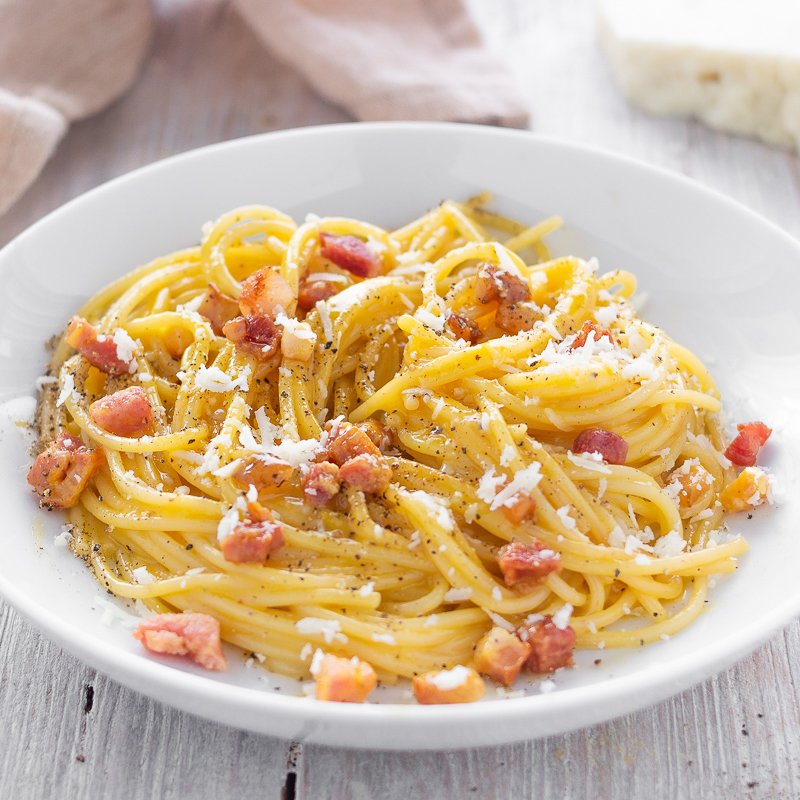
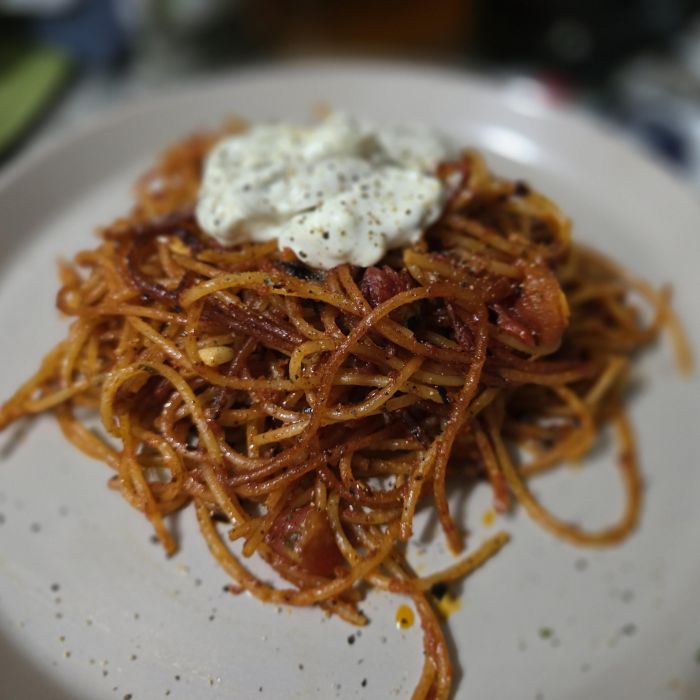
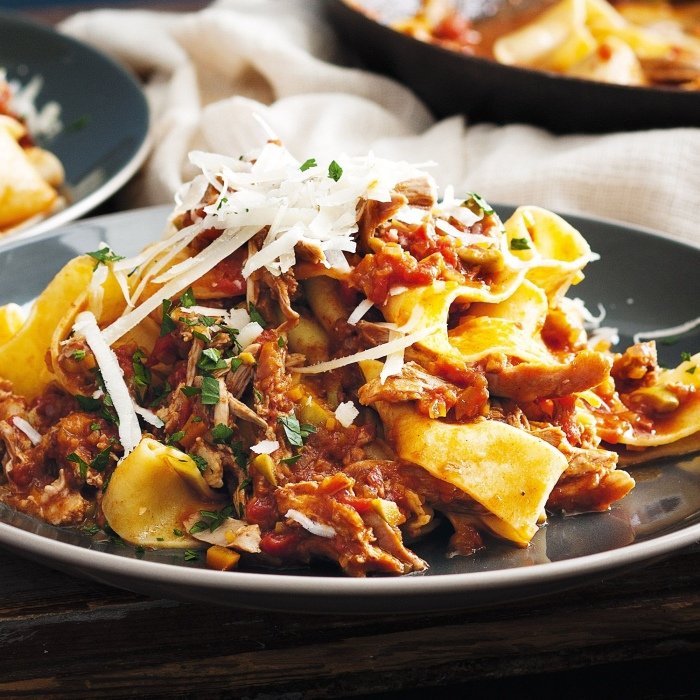
Long shapes (spaghetti, linguine, bucatini) with oily, smooth sauces (carbonara, aglio e olio, cacio e pepe). Short tube shapes (penne, rigatoni, mezze maniche) with chunkier or meatier sauces (arrabbiata, amatriciana, ragù). Long flat ribbons (tagliatelle, pappardelle) with rich meat sauces (bolognese, hare ragù).
Fresh egg pasta and stuffed pasta
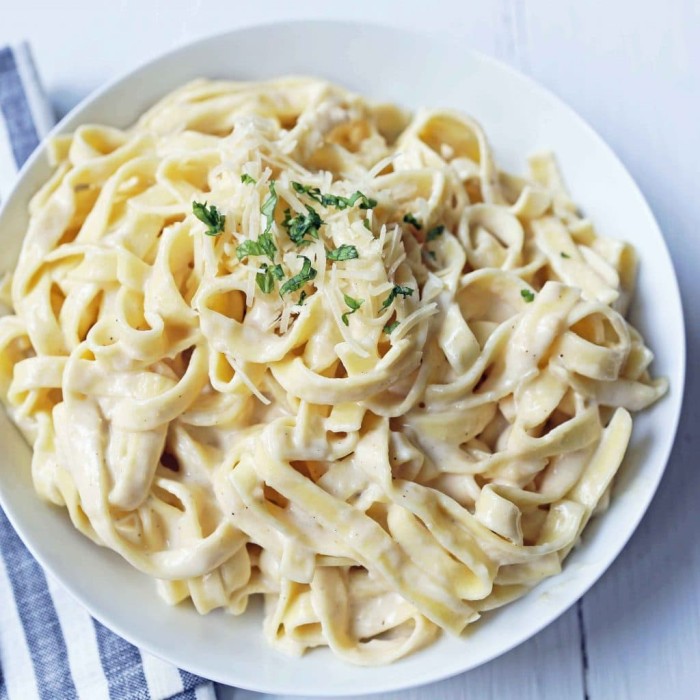
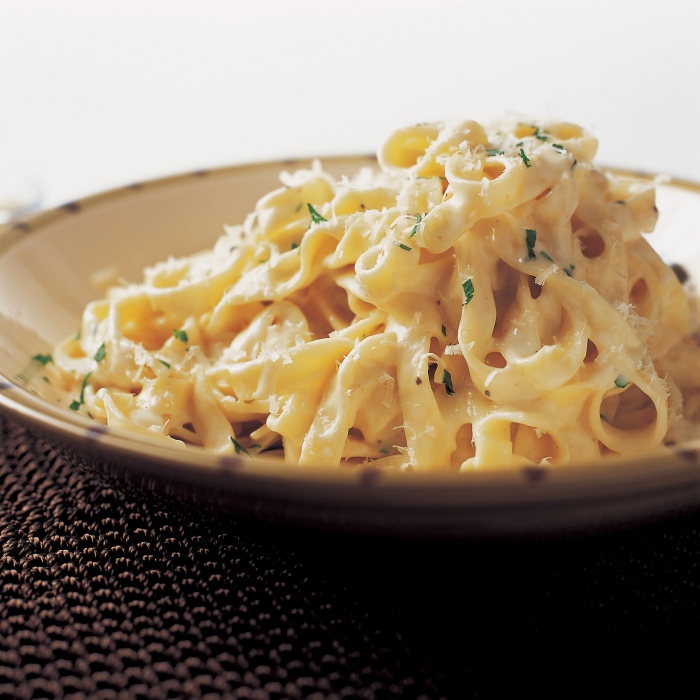
Tagliatelle, fettuccine, pappardelle (long ribbons), tortellini and ravioli (stuffed). Made from 00 flour and eggs in roughly 1 egg per 100 g flour. Worth making when you have time; the texture is fundamentally different from dried.
Sauces — the fewer ingredients, the better
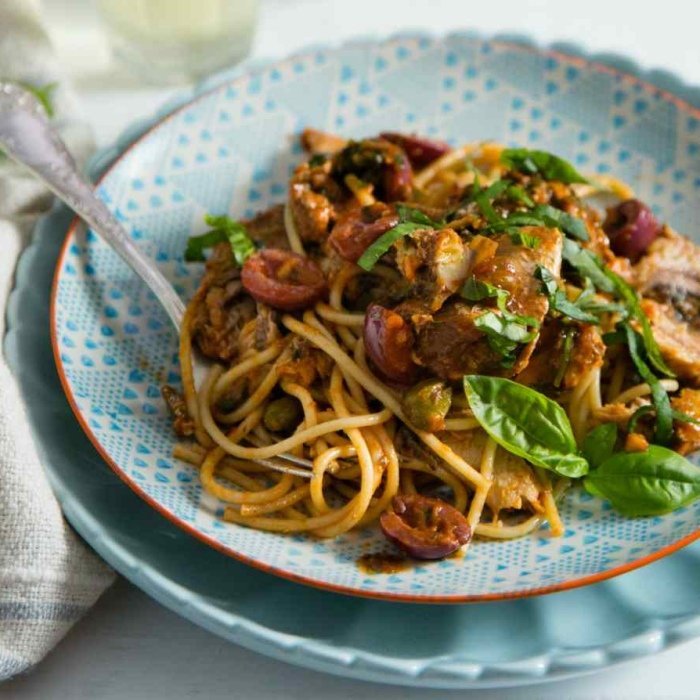
Carbonara (egg + pecorino + guanciale + black pepper); cacio e pepe (pecorino + pepper); puttanesca (tomato + olives + capers + anchovies); Norma (tomato + fried eggplant + ricotta salata). Italian recipes often look short because they are; the technique is in the timing.
Pantry staples
What to keep on hand.
Italian dried pasta (De Cecco, Rummo, Garofalo), 00 flour, eggs, San Marzano tomatoes, parmigiano-reggiano, pecorino romano, guanciale, prosciutto, garlic, basil, flat-leaf parsley, dried chilli flakes, extra-virgin olive oil, anchovies, capers, olives, dry white wine.
You don't need everything at once. Build the pantry as recipes call for it; most of these are shelf-stable and useful across many dishes.
Core techniques
A few moves to learn well.
- Salting pasta water aggressively — at least 1 tablespoon kosher salt per litre, no more oil
- Finishing pasta in the sauce with a splash of starchy cooking water
- Reserving a cup of pasta water before draining — it emulsifies sauces
- Grating cheese fresh and off the heat to avoid clumping